
THE ESSENTIAL IDEA
Hydrovac excavation loosens soil with pressurized water and removes the resulting material by vacuum. It can support focused excavation and utility exposure, but the method is only one part of a properly defined project.
A focused way to remove soil
A hydrovac combines water excavation with vacuum removal. Instead of collecting loosened material with a digging bucket, the system draws it through a hose into a collection tank. WorkSafeBC’s excavation guidance describes this water-and-vacuum process; its regulatory requirements apply in British Columbia, so we use it here only to explain the method.
You may also hear ‘hydro excavation’ used for the same process. ‘Vacuum excavation’ is a broader category: the loosening method can involve water or air. When reviewing a scope, name the proposed method and the work it needs to accomplish. The terms alone do not tell you whether a particular truck, crew or arrangement fits your site.
Where daylighting fits
Daylighting, sometimes called potholing, is an application of excavation: exposing a buried asset at a chosen point so its position can be observed. A project team may need that information before planning a crossing, checking a conflict or progressing another defined task.
A useful request identifies the question the exposure must answer. ‘Expose the service at this crossing so the project team can confirm the relationship’ gives a clearer starting point than ‘send a truck.’ Exact locations, dimensions and responsibilities still need review.
A daylighted point is not a map of every buried asset. Nor does the word ‘hydrovac’ establish that a site is cleared for excavation. Locate information, private infrastructure, utility-owner requirements and the site plan remain separate considerations.
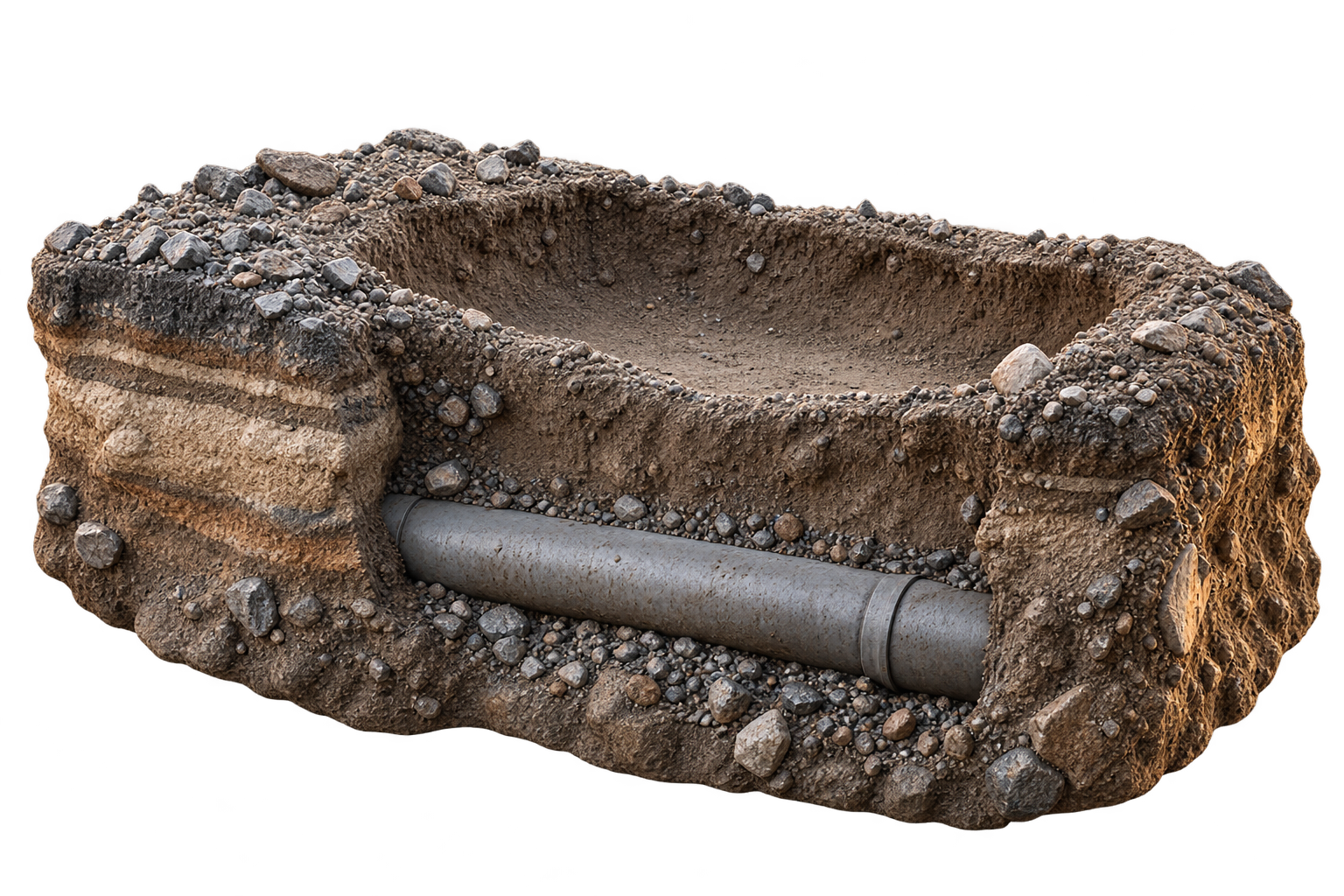
Exposure and locates do different jobs
Ontario One Call coordinates locate requests with participating infrastructure owners; it does not itself perform every physical locate. Its contractor guidance explains the need to gather and review the complete locate information for the proposed work.
Keep the distinction simple in a project brief: locate information informs planning; excavation physically exposes or removes material at the agreed location. Do not describe one as a replacement for the other. On private property, identify any privately owned services that may require separate arrangements.
Choose against the site, not a slogan
There is no useful blanket answer to ‘Is hydrovac always better than mechanical excavation?’ The better starting point is the specific work: its dimensions, the nearby infrastructure, access, ground conditions, material handling and what happens afterward.
For a focused exposure, the planning questions differ from a larger excavation or a new installation. Ask the project team and proposed contractor to explain why a method fits the scope, what information is still missing and how responsibilities are divided. Avoid treating ‘non-destructive digging’ as a promise that damage cannot occur.
- What must the excavation reveal or achieve?
- What information is available about buried assets?
- Can the proposed equipment access and work at the site?
- Who handles removed material, backfill and restoration?
- What conditions would change the proposed scope?
Prepare the decision before the quote
Send a short project description, a marked plan or site reference where available, the approximate scope, access information and target timing. Separate known facts from assumptions: a dimension estimated for pricing should not look like a verified field measurement.
The goal is a shared understanding of the work, not an impressive equipment description. Once the team understands what needs to happen and what remains to be checked, the service discussion becomes more concrete.
This is a planning explainer, not a field procedure. Follow the applicable requirements, utility-owner instructions and qualified project direction for the actual work.
Sources & scope
- WorkSafeBC — Excavation guidelines, Part 20
Method definition only; British Columbia jurisdiction.
- Ontario One Call — Contractor guidance
Ontario locate coordination and complete locate information.
- Ontario One Call — Homeowner guidance
Private-property excavation and private infrastructure.