
HYDROVAC / UTILITY EXPOSURE
Hydrovac
excavation.
Water and vacuum excavation for utility exposure, test holes and focused digging.
Illustrative field imagery
THE METHOD
A defined opening.
A clearer next step.
Understand what is below ground before the next stage of work. Hydrovac uses pressurized water to loosen soil and a vacuum to remove the resulting slurry.
Daylighting describes the goal: exposing a buried utility at a chosen point. Hydrovac describes the water-and-vacuum method used to create the opening.
How the method works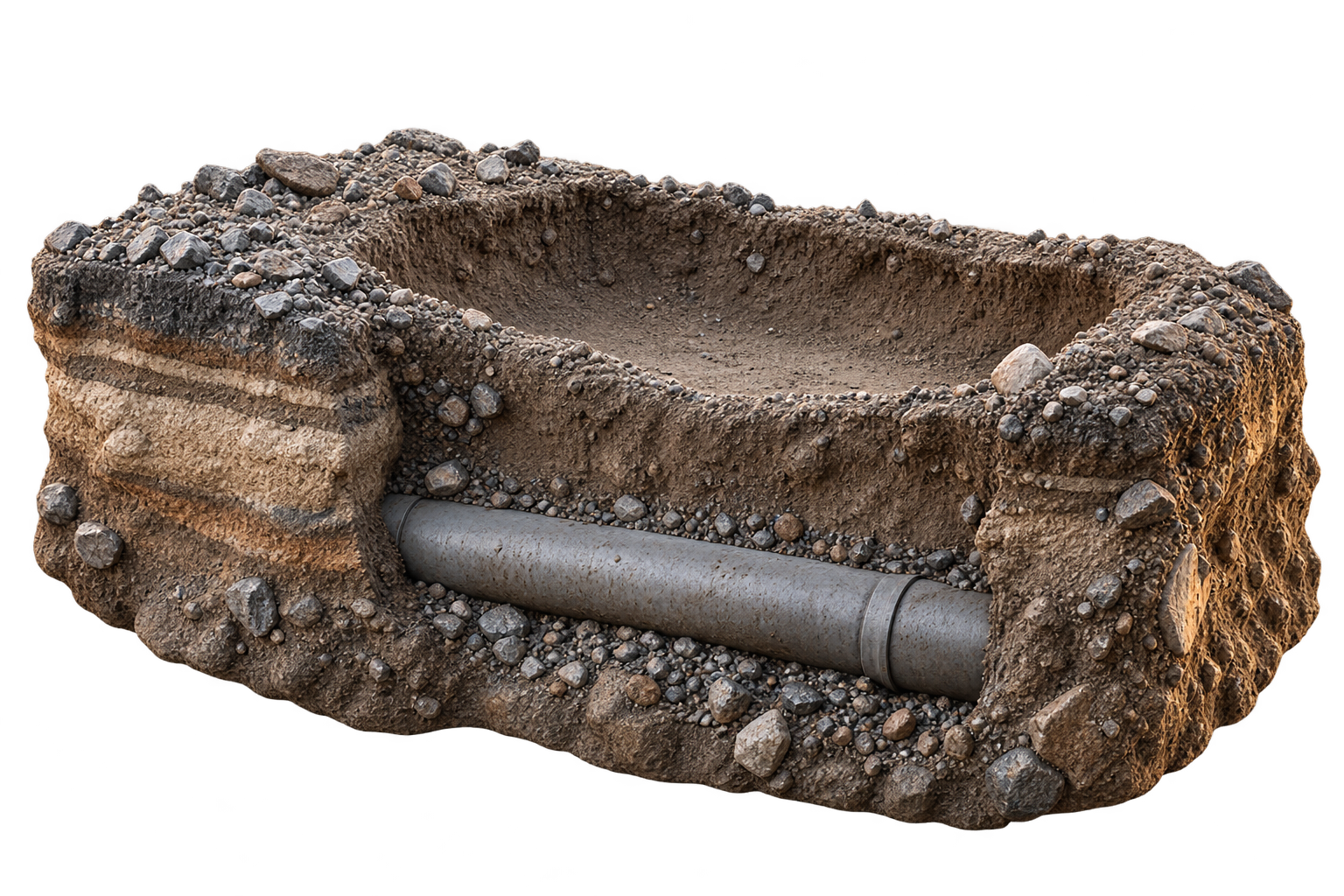
APPLICATIONS
What does the
opening need to answer?
A utility crossing, a test hole and a narrow trench start with different project questions. Define the outcome before choosing the excavation scope.
Utility daylighting
Expose buried infrastructure at defined points so its position can be checked as part of the project’s damage-prevention process.
Potholing & test holes
Targeted openings for checking underground conditions before design, excavation or construction decisions.
Slot trenching
Narrow excavation for a defined alignment, subject to ground conditions, utility-owner requirements and the agreed scope.

BEFORE THE WORK
Bring the site
into the brief.
- Excavation locations, dimensions and intended depth
- Locate information and known private infrastructure
- Truck access, working distance and site restrictions
- Ground conditions, spoil handling and restoration
A SEPARATE REQUIREMENT
Does hydrovac replace utility locates?
No. Excavation and locating are different parts of the work. Locate information, private infrastructure and facility-owner requirements still need to be addressed before digging. Hydrovac is not a guarantee against damage.
PROJECT ENQUIRY
Start with the work that needs doing.
Share the location, intended exposure, approximate dimensions and access information. Mark anything that is still an estimate or an open question.
Discuss a hydrovac project